LockGuard
How I used data to cut churn by 50%, scaled a 20% attachment rate, and secured 8 patents by treating a hardware device as a strategic retention engine...
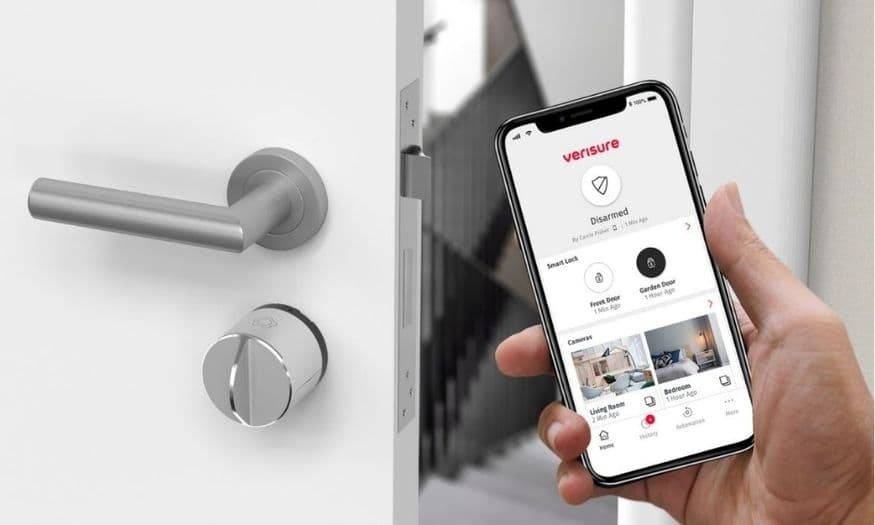
There's a number that has always stayed with me from my time at Verisure. Not because it was impressive on a slide, but because of what it meant the moment I found it.
Customers who owned a connected lock had roughly half the attrition of everyone else in the portfolio.
I wasn't looking for that. I was doing what you do when you're handed a new space to explore — digging through the data, trying to understand what was actually happening versus what people assumed was happening. The connected lock existed in the Nordics. It hadn't expanded. And nobody had really sat down to ask why it seemed to perform so differently.
That number was the breadcrumb. What came after it was the real work.
The problem hiding inside a convenience device
The further I dug, the clearer the picture became. The connected lock wasn't keeping customers because it was clever or because people loved technology. It was keeping them because it solved the thing that drove people to cancel their alarms in the first place: false alarms.
A false alarm isn't a minor inconvenience. It's 3am and your siren is going off. It's your neighbor's lights flickering on. It's the alarm receiving center calling while you're standing in your kitchen wondering if you pressed the wrong button. It's stressful in a way that's hard to explain unless you've experienced it — and Verisure's customers were experiencing it every time they came home.
The lock changed the equation completely. If you're arming and disarming from outside the door, with a device specifically designed for that interaction, you don't fumble. You don't rush. You use your alarm more — and the more you use a service, the more you understand its value.
The business case was hiding inside a usability problem.
The internal sales job
This is the part that doesn't make it onto most resumes.
LockGuard sat outside Verisure's core business. The company was in the business of protecting people — professionally monitored alarms, sensors, cameras, response services. A smart lock, to many people internally, was a convenience device. Something you'd find at a consumer electronics fair, not something that belonged inside a security ecosystem.
I spent a lot of time making the argument that those two things weren't mutually exclusive. That a lock connected to your alarm, with tamper detection and security-grade hardware, wasn't a convenience device at all. It was a security device that happened to also be convenient.
The competitive research helped. I mapped every smart lock on the market — installation type, feature set, positioning. The whole category had converged on convenience. Nobody was owning the security angle. That gap was real, and it was ours to take.
But the argument wasn't won on a deck. It was won on a demo door.
We built a physical demonstration setup to show the installation and operation. A senior leader in the company had been skeptical — concerned, in his words, that it looked like a toy. Until he watched it engage the lock on a high-security door. That moment changed the room.
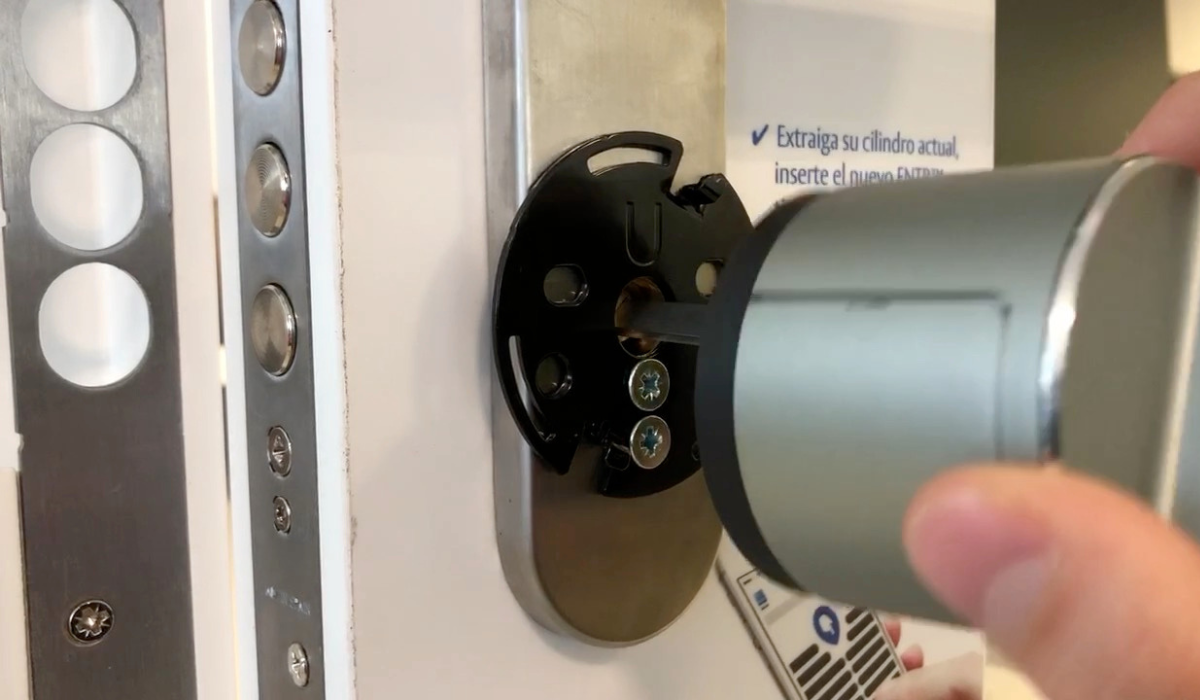
Getting the salesforce on board was a separate challenge entirely. At Verisure, sales reps handled installation themselves. Replacing a lock is not a small ask — it's intimidating, time-consuming, and if your reps don't believe in the product, they won't push it. They'll take the easier path and go find another sale.
We designed the installation kit to address that directly: a 1:1 measurement guide for the cylinders, pre-selected accessories by door type, and an internal challenge to see who could complete a demo installation fastest. The record ended up at 17 seconds.
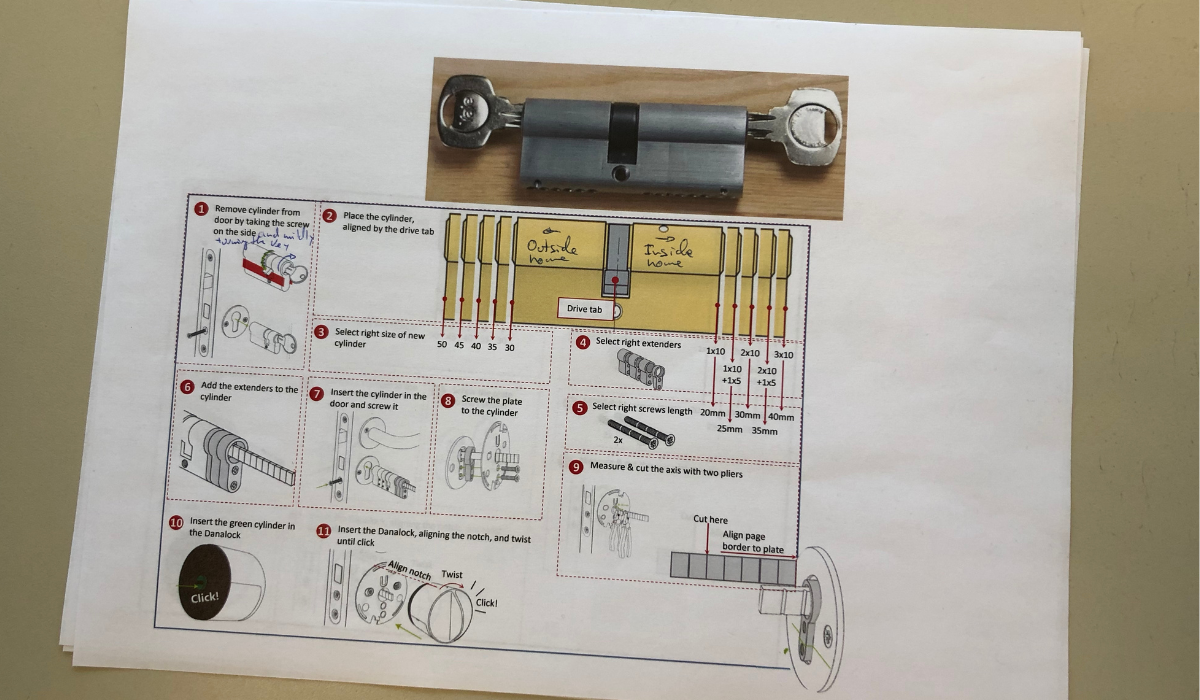
That kind of buy-in isn't manufactured. You earn it by making the hard thing feel possible.
The hardware problem nobody warned me about
Europe's door market is deeply fragmented. Lock standards, cylinder types, door profiles — they vary by country, by building era, by manufacturer. Before we could sell LockGuard anywhere, we had to understand where it would actually work.
I ran research across our technician network throughout Europe, mapping door compatibility by country, quantifying which markets had the density to justify prioritization. It was the kind of work that doesn't feel like product management until you realize it's the foundation everything else sits on.
The cylinder was its own project. For Euro-profile doors — which meant most of our target markets — you had to replace the cylinder. There was no way around it. So we co-designed a custom cylinder with ABUS, one of the most respected names in physical security hardware. I led those conversations: the spec discussions, the sizing decisions, the testing with our internal engineering team, the negotiations with procurement. A mechanical engineer who never used his degree finally using his degree.
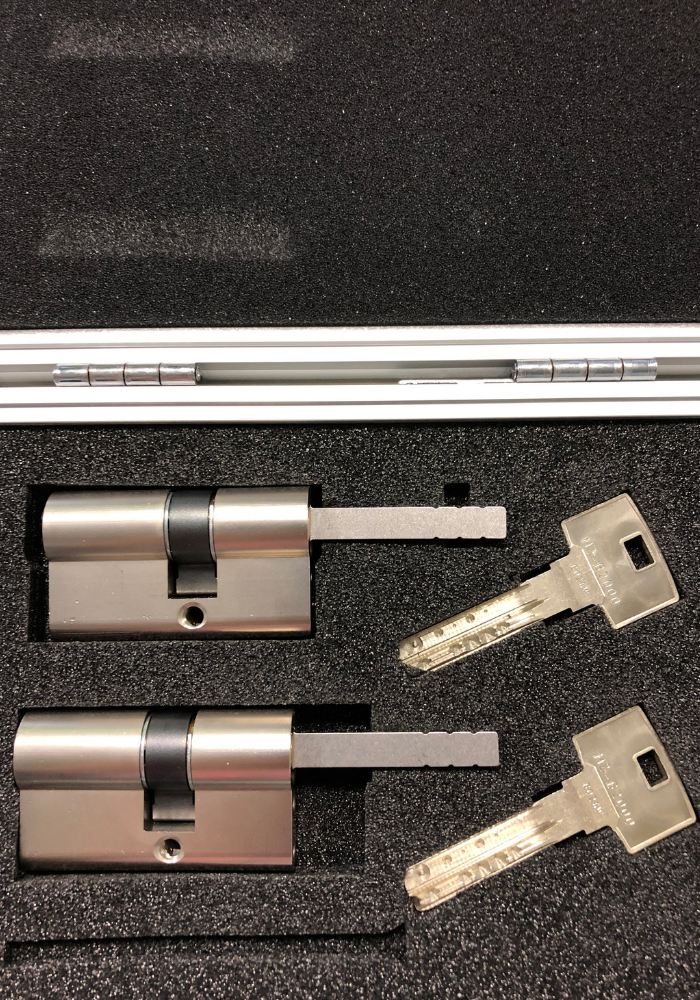
Several of those design decisions are now protected. Eight patents came out of the home access work I was part of during those years at Verisure — covering the lock system architecture, the alarm integration, and the broader framework for managed access and secure delivery that the product made possible.
What it became
LockGuard launched across Spain, France, and Italy. Within months of its introduction in Spain, attachment rates for new customers exceeded 20% — a signal that the market was ready for exactly this kind of product, once someone positioned it correctly.
The Verisure alarm system integrated with LockGuard was later recognized as Product of the Year 2026 in the UK, based on a survey of 8,000 consumers. The 2024 sustainability report cited outdoor access devices as a primary driver of false alarm reduction across the portfolio.
Those are company numbers, earned over years of iteration and deployment. The foundation was laid in those early days of mapping the data, arguing for the security positioning, and figuring out how to install a lock in 17 seconds.
What I'm most proud of isn't the hardware. It's the insight that started it — the idea that a churn problem was actually a usability problem, and that the solution wasn't retention tactics but a product that changed how people experienced their alarm every single day.
That's the version of product thinking I try to bring to everything.
Rafael J. Schwartz
Product leader. Writing about teams, clarity, and building things that matter.
More work

Let’s talk
If something here resonated, if you're working through a product problem, or if you just want to think out loud — reach out!