Quedar
I built an iOS app in 14 days using AI to test a social coordination theory. It proved I can build—but also that building is secondary to solving urgent user friction...
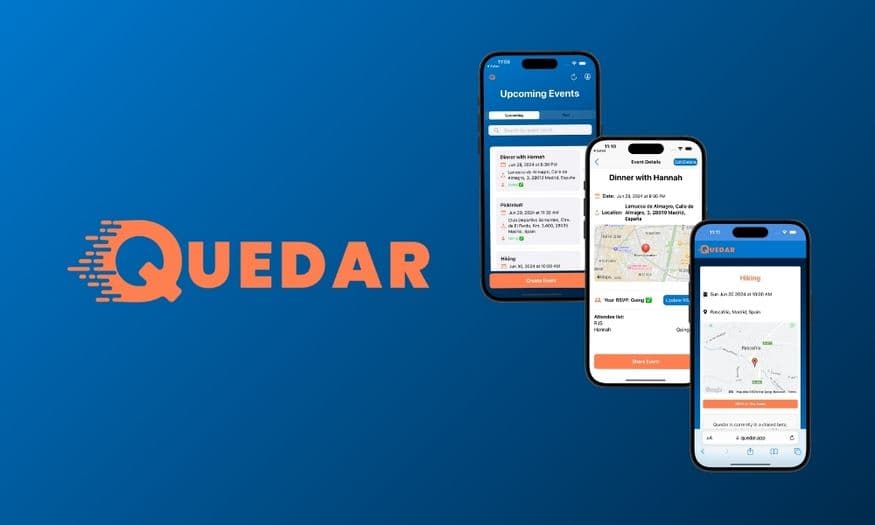
Every friend group has the same problem. Someone says "let's do something next weekend" in a group chat, seventeen messages follow, three people misread the time, and whatever was going to happen quietly doesn't. Or someone sends a calendar invite and it feels like a meeting request, so nobody accepts it, and the thing also quietly doesn't happen.
I kept thinking there was a middle ground. A place where the loose energy of a group chat — "let's do something, I don't know, Saturday?" — could land and turn into something real. RSVPs, a location, a list of who's bringing what, photos after. Not a calendar. Not a chat. Something in between.
I thought about it for a while. Then I built it.
Two weeks from idea to App Store
This was 2023. Claude didn't exist yet as a tool I could use. ChatGPT 3.5 and early 4o were what I had — no CLI integrations, no IDE extensions, no clean workflows. Just a chat window and a lot of copy-pasting.
The process was: write the vision in my head, translate it into prompts, paste the output into Xcode or my editor, debug what broke, go back to the chat. When the conversation got too long, ChatGPT would start losing context — forgetting what the data model looked like, contradicting earlier decisions — and I'd have to reconstruct it. I was the architect. The AI was the hands.
Fourteen days later I had a working iOS app in beta, a Firebase backend, and a webapp for people who hadn't downloaded the app yet.
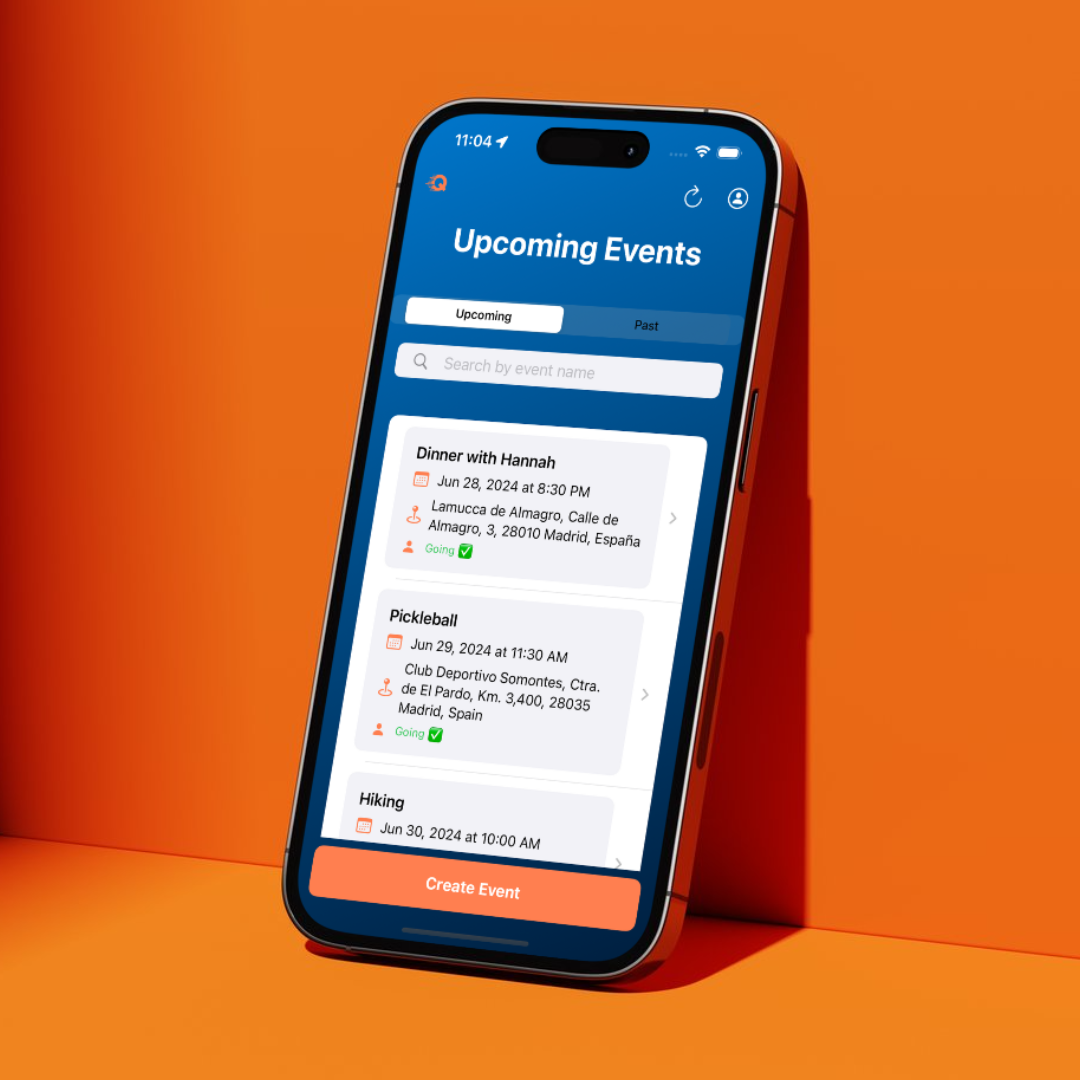
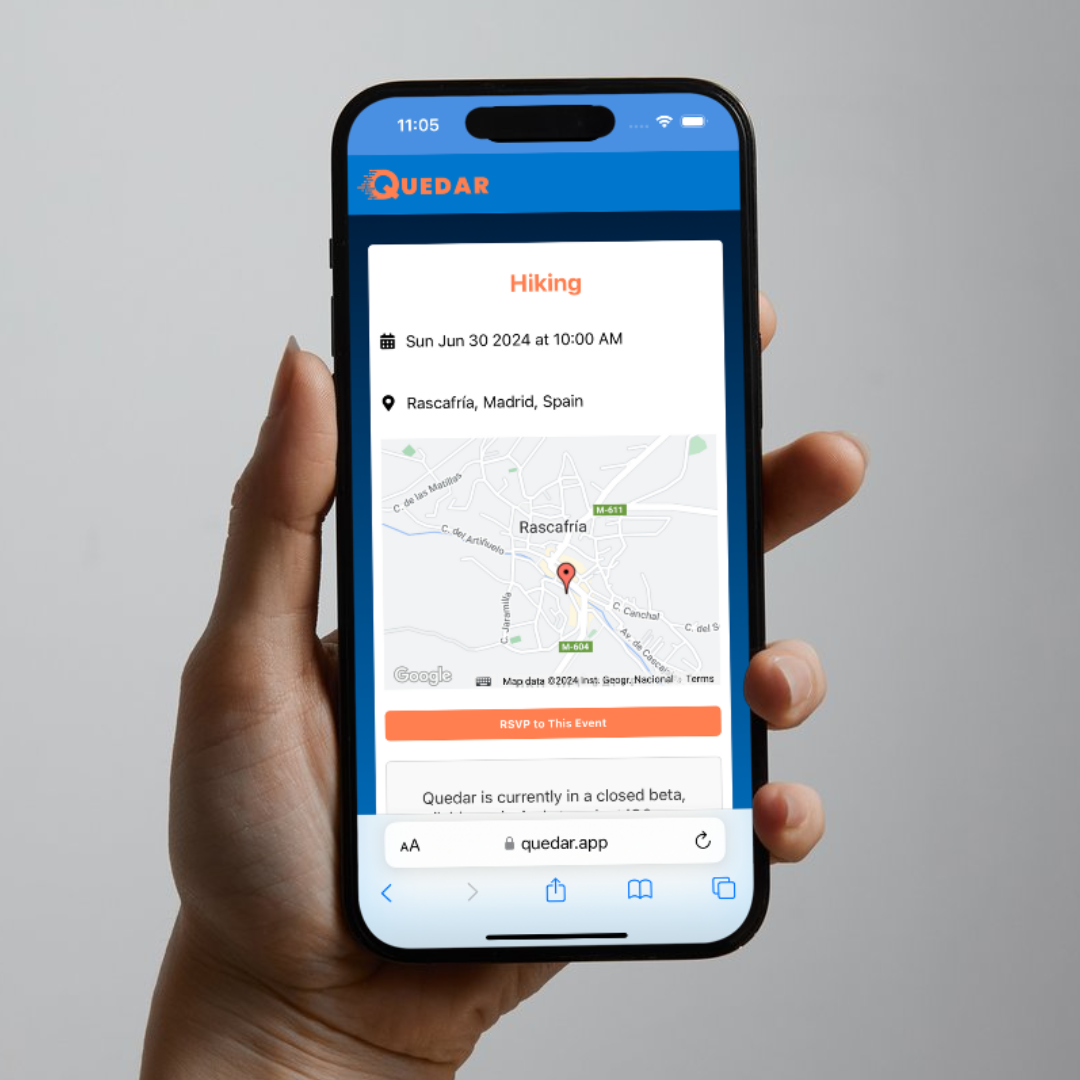
The core flow was simple: create an event, set the date and location, add notes, share it. Recipients got a universal link — if they had the app, it opened directly and added the event to their list. If they didn't, the webapp let them RSVP and prompted them to download. You could also share a WhatsApp message directly into the app and it would parse the event details automatically.
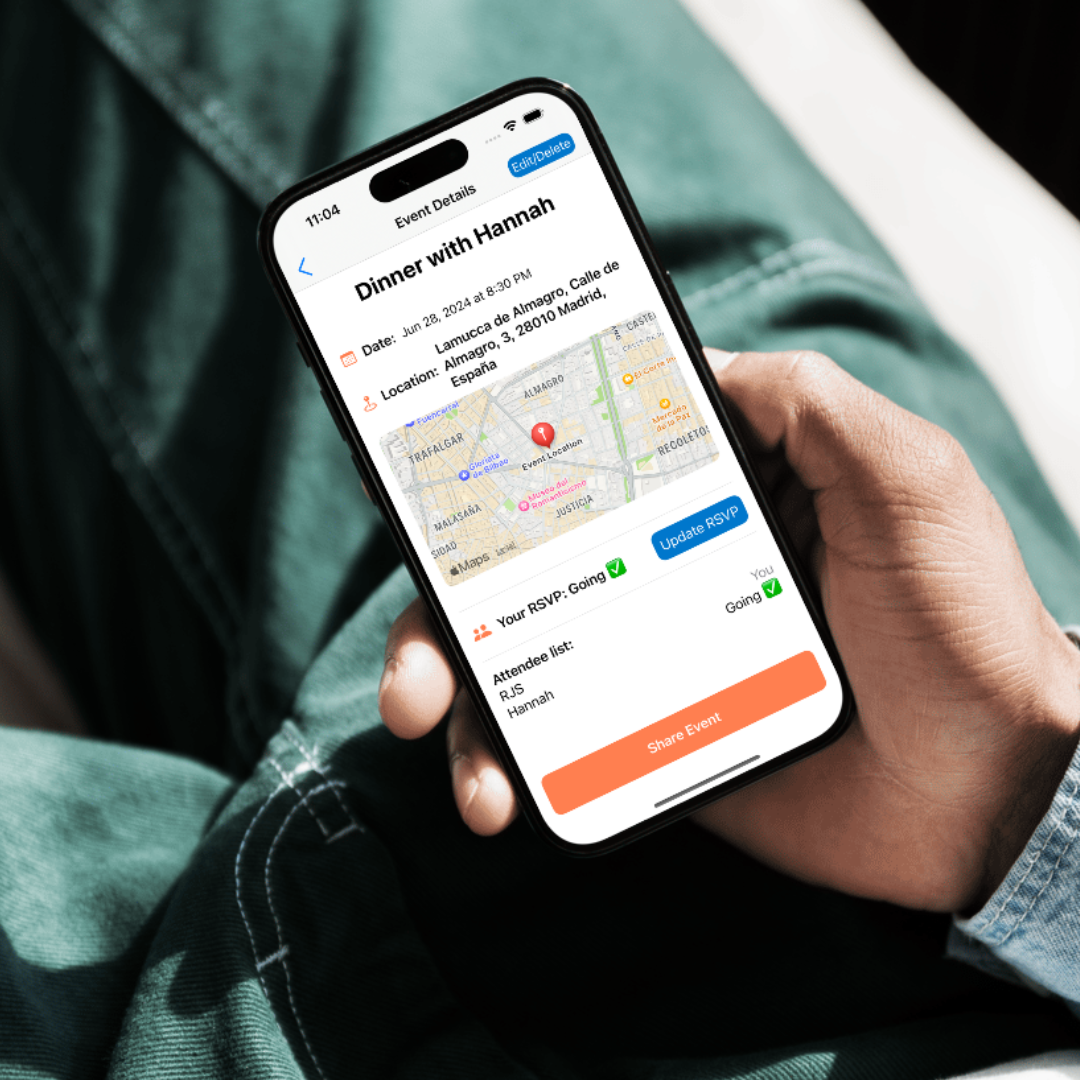
Long term, I wanted to understand where people were going — what kinds of events, which venues, which neighbourhoods — to build something useful for real-world marketing and help businesses like restaurants understand who was actually walking through their doors. The social graph of real plans, not algorithmic content.
That was the vision. The POC worked. Then I submitted it to Apple.
The approval and the silence
Getting approved by Apple felt significant in a way I hadn't expected. There's something about a stranger reviewing your work — your actual code, your actual UI, your actual idea — and saying yes. A couple of friends downloaded it. I watched the analytics like they meant something.
Then the early testers stopped using it.
Not dramatically. There was no feedback, no complaints, no "this doesn't work." Just silence. The kind of silence that's harder to interpret than criticism.
I know now what happened, or at least my best theory. The problem I was solving was real — I still believe that — but it wasn't urgent enough. There's a difference between a problem people have and a problem people are desperate to fix. Quedar sat in the first category. My friends coordinated badly through group chats, but they coordinated. The friction wasn't high enough to make them change behavior.
I was also, by my own admission, never fully in. There was always a part of me standing at the edge of the pool rather than jumping. I moved carefully when the project probably needed someone willing to move recklessly — to push harder on distribution, to recruit beta users beyond my immediate circle, to treat the silence as signal and iterate fast rather than sit with it.
That's on me. The framework told me the truth. I just didn't act on it with enough conviction.
What the project actually taught me
Quedar is the project I'm most honest about because it's the one with the least to hide behind. No team dynamics to blame, no resource constraints, no organizational politics. Just me, a problem I believed in, and a tool that was new enough to be genuinely difficult to use.
What I learned:
I can build. Not in the way a senior engineer builds — with years of pattern recognition and clean architecture — but in the way a product person with a clear vision and enough stubbornness can build. Fourteen days from concept to App Store is not nothing. Swift is not a beginner language. Firebase, universal links, a companion webapp, event parsing from WhatsApp messages — I made all of that work by understanding what I wanted well enough to direct the tools available to me.
I also learned that building is the easy part of the hard problem. Shipping is easy compared to distribution. Getting people to change a habit — even a slightly annoying one — is where most products die, and Quedar was no exception.
And I learned something about AI as a development partner that I use every day now. The constraint in 2023 wasn't the model's capability. It was the interface. Copy-pasting into a chat window, managing context manually, reconstructing lost state — all of that friction is gone now. What took me two weeks of concentrated effort with early ChatGPT I could prototype in a day or two today. The ceiling on what a non-engineer product person can build has moved dramatically, and I think most people haven't caught up to that yet.
Quedar didn't work. I built it anyway, and I'd build it again — probably differently, probably faster, definitely with more willingness to jump into the pool.
The failure was useful. Most of them are.
Rafael J. Schwartz
Product leader. Writing about teams, clarity, and building things that matter.
More work
Let’s talk
If something here resonated, if you're working through a product problem, or if you just want to think out loud — reach out!